31 Aug 2026
 Posted by admin
 Loading ...
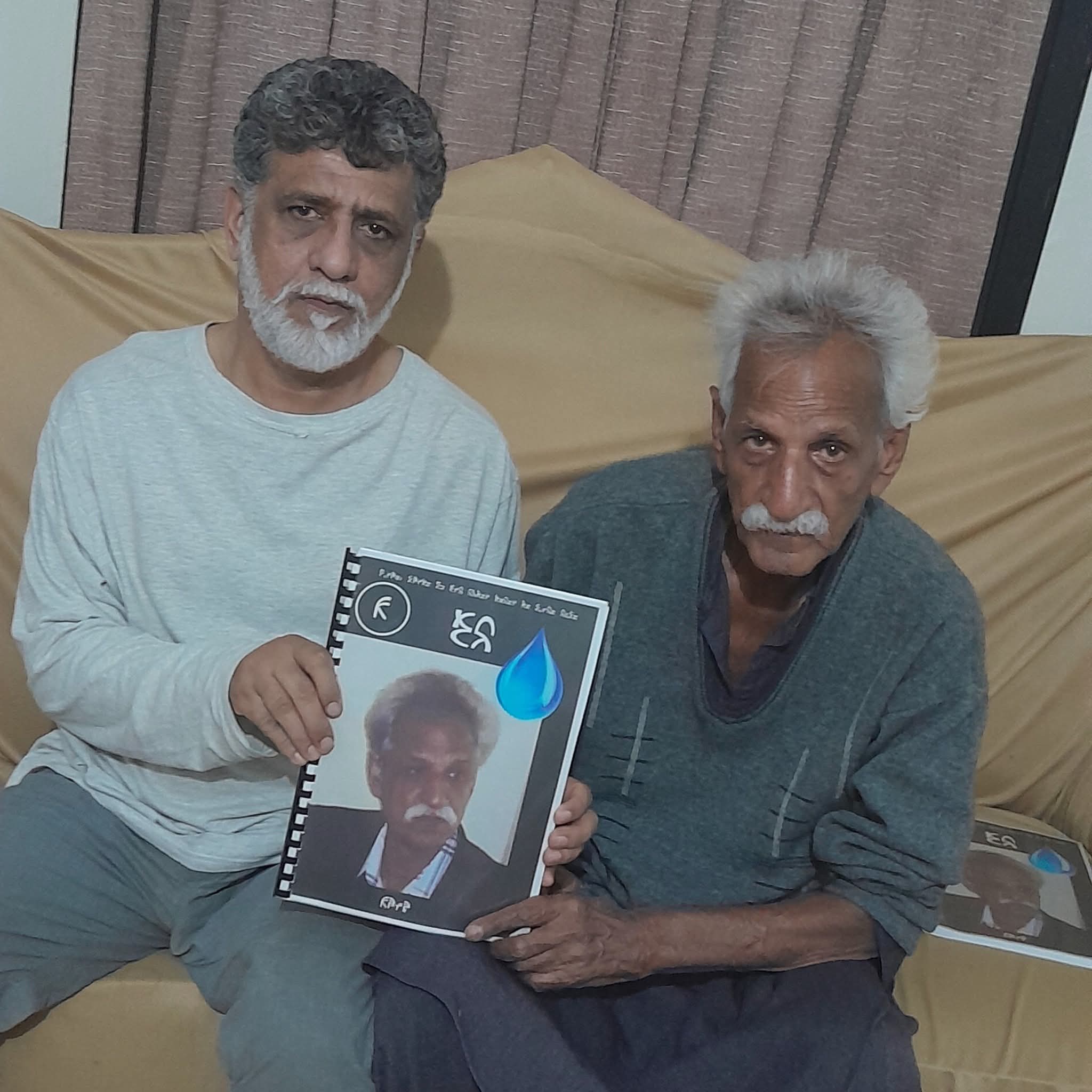
Left : Muhammad Afzal
Right : Ejaz Mahmood / Founder of Saanjo Script
Brief Detail of Punjabi Language, Alphabet, Script.
Punjabi language is an Indo-Aryan language and spoken by about 200 million people mainly in West Punjab in Pakistan by 120 million people and by 80 million people in East Punjab, Haryana, Himachal Pradesh in India. There are also significant numbers of Punjabi speakers in the UK, USA, UAE, Canada, Saudi Arabia, and Australia. The Punjabi nation is the 9th biggest nation in the world, 3rd biggest nation of South Asia. Punjabi Muslims are the 3rd largest ethnic Muslim community in Muslim Ummah and Punjabis are the 60% population of Pakistan and the Punjabi language is spoken by the 80% population of Pakistan. Punjabi language descended from the Shauraseni language of medieval northern India and became a distinct language during the 11th century. The Punjabi language is groomed by the Sufi saints Baba Farid, Baba Nanak, Shah Hussain, Sultan Bahu, Bulleh Shah, Waris Shah, Khwaja Ghulam Farid, Mian Muhammad Bakhsh.
The written standard for Punjabi in both India and Pakistan is known as Majhi, which is named after the Majha region of Punjab. Jhangochi is the oldest and most idiosyncratic dialect of Punjabi. The area of the Jhangochi dialect of Punjabi is the “Bar areas of Punjab”, i.e, areas whose names are often suffixed with ‘Bar’, for example, Sandal Bar, Kirana Bar, Neeli Bar, Ganji Bar and has several aspects that set it apart from other Punjabi variants. This area has a great culture and heritage, especially literary heritage, as it is credited with the creation of the famous epic romance stories of Heer Ranjha and Mirza Sahiba. In West Punjab, it is written with a version of the Arabic alphabet and Persian script known as Shahmukhi script while in East Punjab, Punjabi is written in the Gurmukhi script.
The Gurmukhi script developed from the Landa alphabet and was standardized during the 16th century by Guru Angad Dev Ji, the second Sikh guru. Gurmukhi script is the Sikh script of prayer in which the Guru Granth Sahib is written. The second Sikh guru, Guru Angad transcribed the compositions of his predecessor, Guru Nanak, into Gurmukhi script. He developed a phonetic script, which could be easily learned by the common person. The words of the ancient Gurmukhi script are similar to those of modern Punjabi but differ grammatically in that it is a poetic rather spoken language. The Punjabi alphabet also has additional modern-day characters which are not included in Gurmukhi script and which do not appear in the scriptural verses of the Guru Granth Sahib.
Punjabi is a language but Gurmukhi and Shahmukhi are scripts to write the Punjabi language. As Gurmukhi alphabet is used by the Sikh Gurus and they sang Psalms of Holy Gurbani written in Gurmukhi script therefore, the Gurmukhi script is more familiar and acceptable to Sikh Punjabi. Likewise, Shahmukhi script is based upon the Arabic alphabet and writes in Persian script. The Arabic alphabet is used by the Muslim Punjabis to read Holy Quran written in Arabic script therefore, the Shahmukhi script is more familiar and acceptable to Muslim Punjabi.
All Punjabis speak Punjabi in different dialects but Gurmukhi and Shahmukhi scripts are used to write the Punjabi language. As Sikh Punjabis have a religious attachment with Gurmukhi and Muslim Punjabis have a religious attachment with Shahmukhi therefore, it will be better for Sikh Punjabis to write Punjabi in Gurmukhi and Muslim Punjabis to write Punjabi in Shahmukhi. No need for Sikh Punjabi and Muslim Punjabi to dispute upon writing script of Punjabi language because at present people learn more than two or three languages, therefore, it is not difficult to learn both scripts of Punjabi language for those Punjabis they have the interest to understand the writings in another script of Punjabi language.
A new script of Punjabi language is created by Ejaz Mahmood known as “Saanjo” is completed , is more comprehensive .
1- Saanjo is a script which is precisely phonetic.
2- It runs in all computer applications.
3- Science, math and computer technology compatible.
3- Our own for our own language. So it is our emblematic script.
4- People specific , not religion specific.
5- It is an all out creation , a mother creation to begin creativity trends in our people.
6- Saanjo is precise for all dialects and languages in the land of rivers.
7- Being precisely phonetics , it is easy to learn.
8- There is one to one phonics- glyph relationship.
9- Being our own from our own land makes our people feel pride and happy. All its terminology in our own language and therefore it strengthens our identity.
10 – Its application to give basis of unison among people of land of rivers.
#PGFInt / Muhammad Afzal